
Reclaim Your French Heritage — Citizenship by Descent
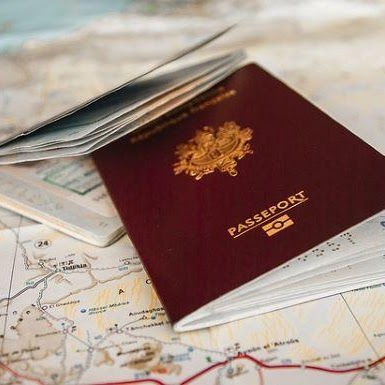
A faded photograph in an old suitcase. A French surname altered at arrival. A family story that crossed oceans but never fully ended.
French citizenship by descent is not about “applying” - it is about recognising a legal continuity that may already exist.
Find more about the process of confirming that existing French nationality.
Your family left France — the citizenship never expired
Ius sanguinis is the main principle governing French citizenship.
It creates the transmission through bloodline. Once someone is born to a French parent abroad, the citizenship is automatically passed down. Even if this birth is never registered with French authorities. This applies to a chain of filiation linking you to a French ancestor. Therefore, if your parent, grand-parent, great grand-parent (or more) was French, you might legally be a French citizen already. A multi-generational transmission is the principle.
Tracing your French lineage
Genealogical reconstruction through :
- Civil records (état civil)
- Parish, consular and military archives
- Birth/marriage certificates
- Naturalisation records
French Citizenship by Descent Through a Grandparent
Apply for a French Dual Nationality through a Grandparent
For most families who reach out to us, the connection to France runs through a grandparent rather than a parent — and the rules shift once you move a generation further back.
French nationality passes through an unbroken parent-to-child chain: your grandparent must have been French at the time your parent was born, and your parent must have remained (or become) French at the time you were born. It does not mean that they must have held French documents, but that this parent already born abroad was at least virtually French, by operation of law.
It makes little difference whether the French line runs through your grandfather or your grandmother — French law has treated maternal and paternal transmission equally since 1973, so a French grandmother can under some conditions carry the same weight as a French grandfather.
To document the claim, we typically need your grandparent's full birth certificate (copie intégrale, not a summary extract), their marriage certificate if relevant to the surname or to your parent's own status, and evidence that they held French nationality at the relevant moment — a French passport, identity card, consular registration, or civil status record.
When the grandparent's birth was recorded in a French registry that has since been lost, damaged, or never digitised (common for records from former French territories, or for towns whose archives were destroyed during the World Wars), we work with the French Ministry of Foreign Affairs' central civil registry service and municipal archives to locate substitute records — military files, religious registers, or naturalisation files — that can reconstruct the same facts. This is exactly the kind of gap an experienced descent case handles routinely; it is rarely a dead end, but it does change how long the file takes to build.
French Citizenship Through a Great-Grandparent: How Many Generations?
Dual Citizenship through Ancestry
There is no fixed generational cutoff written into French law — nationality by descent can, in principle, be traced back through a great-grandparent, a great-great-grandparent, or further, as long as every single link in the chain can be documented.
The real limit is not "how many generations" but whether the chain was ever broken, and whether it has effectively lapsed through a rule called perte de la nationalité française par non-usage (loss of French nationality through non-use), set out in Article 30-3 of the French Civil Code.
In simplified terms, if a line of ancestors lived outside France for more than fifty years without any of them exercising or documenting their French nationality — no French passport, no consular registration, no military service, no vote — a French court clerk can find that the nationality was lost through that extended absence.
This is precisely why "how many generations back does it go?" rarely has a one-line answer, and why it makes people uneasy: two families with an identical family tree can land on opposite outcomes depending on a single surviving document.
An old French passport, a consular card, or even a period of residence in France by any ancestor in the chain might be enough to keep the line alive.
This is not a question we can answer in the abstract — it requires a review of what actually survives in your family's records, which is the first thing we do in every consultation.
French Citizenship by Ancestry: What Counts as Proof
Proving French ancestry for nationality purposes is a documentary exercise, not a matter of family lore, however well-established the story.
French administration and French courts work from a defined hierarchy of evidence: full birth certificates (not short-form extracts) for every generation in the chain, marriage certificates where they affect legitimacy or surname continuity, and death certificates where relevant to the sequence of events.
Where an ancestor's own French nationality is in question rather than assumed, supporting proof — a French passport, national identity card, certificate of French nationality, consular registration card, or military records — carries significant weight.
What French authorities generally will not accept on its own: family stories, unsupported genealogical trees, DNA results, or foreign records that describe someone as "French" without an underlying French civil status document to match.
Translations must be certified and, for documents from outside France, apostilled or legalised according to the relevant international convention.
The most common obstacle we see is a missing link in the middle of the chain — a birth certificate that was never issued, or was destroyed in a fire, war, or archive consolidation. When that happens, we reconstruct the missing record through parallel sources: parish and civil registers, immigration and ship manifests, naturalisation files in the destination country, and French consular archives abroad. A gap in the paperwork is a research problem to be solved, not automatically a closed door.
French Passport by Descent: How to Apply
Dual Passport Dual Citizen or Dual Nationality ?
This is one of the most misunderstood steps in the entire process, because having the legal right to French nationality and holding a French passport are two separate things.
Establishing that you are French by descent is a matter of law: if the chain of transmission is unbroken, you are already French, whether or not any document says so yet, smae for a parent or grandparent born abroad.
The passport is simply the travel document that follows once that status has been formally recognised — it is proof of the right, not the source of it.
In practice, the path runs through your nearest French consulate (or, in some circumstances, the Service Central d'État Civil in Nantes).
Whether a Certificat de Nationalité Française (CNF) is required first depends on the consulate and on how well-documented the chain already is: some consulates will issue a first French passport directly once the civil status chain is clearly established and registered (transcription of the birth certificate), while others — particularly where the French ancestor is a grandparent or more distant, or where nationality has never been formally exercised — will ask for a CNF from the Tribunal Judiciaire de Paris before they will proceed.
Getting this sequencing right, and knowing which consulate will accept what, is one of the most common places where otherwise well-documented applicants lose months.
French Nationality by Descent vs. French Citizenship: the Difference
People searching for information on this topic split fairly evenly between the terms "nationality" and "citizenship," often assuming they lead to two different outcomes.
They don't. In French law and in everyday use, nationalité française and citoyenneté française describe the same legal status — the bond that ties a person to the French state and gives them the corresponding rights and obligations.
English-language sources sometimes draw a technical distinction between "nationality" (an international-law concept) and "citizenship" (a domestic-law concept of political membership), but for French descent cases this distinction has no practical consequence: whether your documents say nationalité or you ask about citizenship, the legal test, the required proof, and the outcome are identical.
If you have found information under one term and not the other, you have not missed a separate pathway — you were reading about the same one.
French Dual Citizenship by Descent
France places no restriction on holding French nationality alongside another: French law fully permits dual and multiple nationality, and recognising your French nationality by descent does not require renouncing, or even disclosing, any other citizenship you hold.
Whether the reverse is true — whether your country of birth or current nationality allows you to also hold French nationality — depends entirely on that country's own law, not on France's.
Some countries impose no restriction at all; a smaller number restrict or historically discouraged dual nationality, or attach conditions such as needing to formally retain their nationality through a declaration once you acquire another. Even for those countries imposing restrictions on dual citizenship, it is impossible for them to know that you became French. French governement does not communicate citizenship status on, their nationals to foreing countries.
How to Apply: Step by Step
- Eligibility review. We map your family tree against the legal chain of transmission, identify which ancestor is likely to carry the French nationality, and flag early on whether Article 30-3's non-use rule could be a factor.
- Document collection. We identify every certificate needed across the generations — birth, marriage, and where relevant death certificates — and help you request the ones you don't already have from French and foreign civil registries.
- Translation and apostille. Foreign documents are certified-translated into French and apostilled or legalised, as required, so they will be accepted by French authorities.
- Filing. Depending on your situation, this means requesting a transcription of the relevant birth certificate, applying for a Certificat de Nationalité Française through the Tribunal Judiciaire de Paris, or applying directly for a passport at your consulate.
- Waiting period. Processing times vary significantly by consulate, by tribunal caseload, and by how complete the file is on submission.
- Outcome. If the certificate or passport is granted, you receive formal recognition of a status the law says you already held. If a request is refused, the reasons are stated in writing, and in most cases the file can be strengthened with additional evidence and resubmitted, or challenged through the appropriate channel — a refusal is very rarely the end of the road, particularly when it stems from a documentation gap rather than a genuine break in the chain.
How Long It Takes and What It Costs
Most descent cases run somewhere between 12 and 24 months from the first document request to a passport in hand, though straightforward cases with well-preserved records can move faster, and cases requiring archival reconstruction — a lost registry, a name changed at immigration, a missing generation — can run longer.
The three factors that move the timeline more than any other are how many of the required documents already exist versus need to be located or reconstructed, which consulate or tribunal is handling the file (caseloads vary widely), and whether the case needs a Certificat de Nationalité Française before a passport can be requested.
Costs follow a similar pattern: there is no government filing fee for the CNF itself, so the real cost of a case sits in document retrieval (archival research fees where records must be traced), certified translation and apostille of each document, and legal fees for managing the file end to end.
We don't publish a flat price on this page because the honest answer depends on how much of your family's paperwork already exists — a case with a complete set of certificates in hand costs meaningfully less to run than one that requires rebuilding a broken link three generations back.
The fastest way to get an accurate range for your own situation is the same first step as everything else on this page: a conversation about what you already have.
Secure Your French Citizenship by Descent
From Family Story to Official Recognition
Your grandmother's birth certificate. A name slightly misspelled at Ellis Island. These are not just memories — they may be the foundation of a legal claim that never expired.
We translate your family's story into an official French dossier: genealogical research, civil record recovery, certified documentation, and consular submission. Each file is built to anticipate the questions before they're asked.
The result: a certificat de nationalité française — confirmation that you are, and always were, French.
What Becoming French Means Today

- EU freedom of movement — live and work in any of 27 member states
- Full rights in France — residency, employment, no permits required
- Pass it to your children — French nationality is transmissible by descent
- Identity restored, legally secured — a status that cannot be taken away

We've Walked This Path With Families Like Yours
- A third-generation American from Louisiana. A new york daugther whose father lost his French birth certificate. A Texan whose great-grandfather left almost no paper trail. Families who thought the door was closed.
- Most cases take 12 to 24 months end-to-end. All of them start with a single conversation.