

You are French. You have always been French. And yet, when you applied to renew your passport, the...
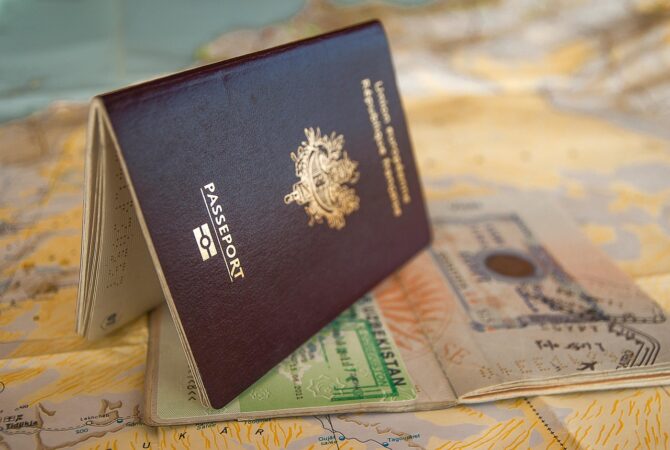
You have held French nationality your entire life. You may have been born in the United States, the United Kingdom, Brazil, or anywhere else outside France, to a French parent. You have already been issued a French passport, sometimes more than one, over the years. Then, one day, you apply for a routine renewal — and the consulate or prefecture tells you that before they can renew your passport, you must first obtain a Certificat de Nationalité Française (CNF).
This scenario is becoming increasingly common for French nationals born abroad by descent (Français nés à l'étranger par filiation). It can feel arbitrary, even alarming: nothing has changed in your situation, yet the administration is suddenly treating your nationality as an open question. Understanding why this happens — and, more importantly, when applying for a CNF is actually the wrong move — can save you from a situation that is very difficult to reverse.
Why Does the Administration Suddenly Ask for a CNF?
Under French law, a person's nationality is not always self-evident from a passport or an ID card. Those documents are simply administrative consequences of a nationality that must, in principle, rest on a valid legal basis: birth in France, filiation from a French parent, naturalization, and so on.
For French nationals born abroad, that legal basis often depends on a chain of civil status documents: the parent's own French birth or nationality, the registration (or transcription) of the applicant's foreign birth certificate, sometimes a marriage certificate, and so forth. When an official reviewing a renewal file notices a gap, an inconsistency, or simply decides to apply a stricter standard than the official who processed the previous passport, they can ask the applicant to remove all doubt by producing a CNF.
We've discussed the legal mechanics of this kind of refusal in detail in French Passport Refused: Your Rights When France Challenges Your Nationality, and the specific role civil status codes play in these disputes in French Birth Certificate & Proof of Nationality: SCEC Codes, CSL, COL Explained.
The CNF Is the Strongest Proof of Nationality — But It Is Not Always the Right Tool
A Certificat de Nationalité Française, issued by a greffier en chef at the Tribunal Judiciaire, is, on paper, the most authoritative document confirming French nationality. Once issued, it is difficult for any administration to challenge it again. That is precisely why so many officials default to demanding one: it closes the file, permanently, from their point of view.
From your point of view, however, that is exactly the problem. Applying for a CNF means voluntarily reopening your entire nationality file from scratch, including every link in the chain of filiation and every civil status document behind it, going back one or two generations. If there is a defect anywhere in that chain — a birth that was never properly transcribed, a missing registration, an ambiguity in a parent's own nationality — applying for a CNF can turn a routine passport renewal into a serious, sometimes irreversible, nationality dispute. In other words, requesting a CNF preventively can be a shot in your own foot.
Who Has to Prove What? The Burden of Proof Question
This is the heart of the issue, and the reason a legal assessment before acting is so important.
As a matter of principle, French law places the burden of proving nationality on the person claiming it (Article 30 of the Code civil): if your nationality is contested, it is generally up to you to demonstrate that you meet the legal conditions. Applying for a CNF accepts that burden fully and formally.
But French law also provides an important exception. Under Article 30-2 of the Code civil, when a person has enjoyed a continuous, consistent possession d'état de Français — that is, when they have genuinely and consistently been treated as French by the French state itself (passports, national identity cards, electoral registration, and so on) over a defined period — the burden of proof can shift. In that scenario, it is the administration that must prove you are not French, not the other way around.
This is precisely why, in many of these cases, the better strategy is not to rush into a CNF application, but to first build the file around that possession d'état, and force the administration to justify its doubt rather than handing them a blank invitation to dismantle your nationality from the ground up.
What Should You Do If Your Passport Renewal Is Refused?
Before responding to a request for a CNF, or before letting a deadline pass in silence, it is worth having your specific file reviewed:
- Identify whether there is a genuine weakness in the chain of transmission, or whether the request is simply an overly cautious reflex from a particular official.
- Assess whether you already benefit from a protected possession d'état that could shift the burden of proof back onto the administration.
- Determine the safest procedural path: responding to the consulate directly, engaging a formal contentious procedure, or, only where appropriate, proceeding with a CNF application.
Each of these paths has different risks and different timelines, and choosing the wrong one first can foreclose the better options later.
Get a Legal Assessment Before You Act
If your French passport renewal has been refused, or you have been asked to produce a Certificat de Nationalité Française, do not submit any application before understanding what you are risking. I assist French nationals born abroad, and their families, in assessing these files and building the strongest possible strategy — including, where relevant, arguing that the burden of proof lies with the administration rather than with you.
Learn more about how I can help on my French Citizenship Assistance & Application Refusals page, or contact me directly to have your situation reviewed before you respond to the administration.